
Ho Chi Minh City Layover: From Airport Arrival to Saigon Adventure
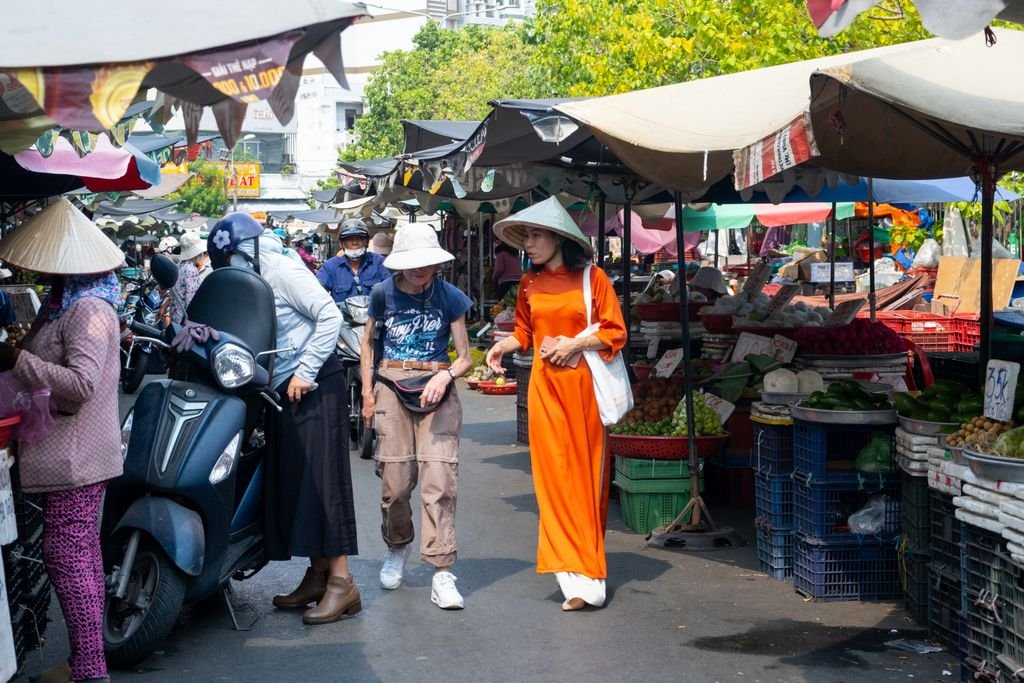
Cross a street in District 1 at rush hour and you’ll understand something about this city that no guidebook fully prepares you for: thousands of motorbikes flow around pedestrians like water around a rock, never quite stopping, never quite hitting anyone. The trick, locals will tell you, is to walk slowly and predictably and let the traffic read you. It’s a small, perfect metaphor for the city itself: chaotic on the surface, genuinely working underneath, and much easier to navigate once you stop bracing for impact and just keep moving.
Ho Chi Minh City is the answer sentence first: SGN is Vietnam’s busiest airport, handling more than 42 million passengers in 2025, and sits just 7km from District 1, the compact downtown core holding most of what a layover traveller wants to see. The catch is that 7km can mean 20 minutes or 90 depending entirely on when you’re travelling; this is a short-distance, high-variance city, and the gap between best case and worst case is bigger here than almost anywhere else in this guide series.
The bigger catch, and the reason this guide leads with it: Vietnam’s entry paperwork has genuinely multiplied in 2026. On top of your visa or visa exemption, every foreign passport holder arriving at SGN specifically must now complete a mandatory Digital Arrival Card within 72 hours of landing, a requirement that only started 15 April 2026 and doesn’t yet apply at Vietnam’s other airports. A second, separate health declaration becomes mandatory from 1 July 2026. None of this is difficult, but it is new, it is SGN-specific, and skipping it is not an option.
Below: the full paperwork stack in the order you actually need to handle it, why the airport’s three-terminal shuttle system only runs one way for transit passengers, how much time Ben Thanh Market and the War Remnants Museum genuinely need, and how to eat well on a tight window in a city built for street food.
Vietnam’s entry requirements changed substantially in 2026, and all three pieces apply specifically to SGN. First: your visa status. Around 25 nationalities (UK, most of the EU, Japan, South Korea and others) get 45 days visa-free; everyone else, including US, Canadian, Australian and Indian passport holders, needs an e-visa (USD 25, 3 to 5 business days to process, apply at least a week ahead). Second: since 15 April 2026, every foreign passport holder arriving at SGN, visa-exempt or not, must complete a Digital Arrival Card online within 72 hours of landing, producing a QR code for immigration. This requirement is currently unique to SGN among Vietnam’s airports. Third: from 1 July 2026, a separate health declaration becomes mandatory for all arrivals, submitted within 7 days of travel via a different portal. None of these replace each other; all three may apply to the same trip. Sort all three before you leave home, not at the gate.
Airlines at SGN: Who Flies Here
Tan Son Nhat handled more than 42 million passengers in 2025, nearly 18 million of them international, making it the busiest airport in Vietnam and one of Southeast Asia’s ten busiest hubs. A new Terminal 3 opened in April 2025, primarily absorbing domestic traffic to relieve pressure on the older terminals.
Vietnam Airlines: the flag carrier anchoring SGN
Vietnam Airlines holds the largest share of SGN’s traffic, roughly 37 per cent of the airport’s connection options according to 2025 industry rankings, and anchors both the domestic network and Vietnam’s long-haul international reach. Terminal 3, opened April 2025, now hosts Vietnam Airlines’ domestic operations alongside Pacific Airlines, VASCO, Bamboo Airways, Vietravel Airlines and Sun Phu Quoc Airways.
Should You Leave the Airport? The Decision Guide
Six hours is the realistic floor for a Ho Chi Minh City layover, assuming your visa, Digital Arrival Card and (from July 2026) health declaration are all sorted before you land. The maths: international processing runs 60 to 90 minutes, domestic 30 to 60, transit to District 1 is 20 to 90 minutes depending entirely on time of day, and a 2-hour return buffer accounts for that variance.
How much time do you actually have?
Enter your arrival and departure and we calculate the real usable window after immigration, transit and buffer time. Most people have less than they think.
Getting Into Ho Chi Minh City: Every Option, Priced
There is no metro link to the airport yet, so the choice comes down to Grab, taxi, or bus, with traffic timing mattering more than the option you pick.
| Option | To | Time | Cost | Notes |
|---|---|---|---|---|
| Grab | District 1 | 20–90 min, highly traffic-dependent | 150,000–250,000 VND (~$6–10) | The standard, transparent-pricing option. Requires the app and mobile data. Pickup from a designated rank outside arrivals. |
| Licensed taxi (Vinasun, Mai Linh) | District 1 | 20–90 min, traffic-dependent | 200,000–350,000 VND (~$8–14) | Metered; stick to the well-known green (Mai Linh) or white (Vinasun) liveries to avoid inflated-meter scams. |
| Bus 109 | Ben Thanh / District 1 | 45–60 min | ~20,000 VND (~$0.80) | Cheapest option, air-conditioned, but slower and requires walking with luggage. Does not connect directly to Metro Line 1. |
| Pre-booked private transfer | District 1 | 20–90 min, traffic-dependent | Fixed price, booked in advance | Driver meets you inside arrivals with a name sign, removes any pricing uncertainty for first-time visitors. |
If your connection involves the new Terminal 3, know this before you plan your route: the airside shuttle bus for transit passengers runs from T3 to T1 only, every 20 minutes, and does not operate in the reverse direction. Going from T1 or T2 to T3 requires exiting the terminal you’re in and using the separate landside shuttle (which serves all three terminals every 15 minutes) instead. Confirm which direction you need before you commit to a shuttle stop.
Pay for Grab, street food and coffee the smart way. Vietnam remains largely cash-based outside modern malls and hotels, and small vendors, the exact places worth eating at, rarely take cards. A Wise or Revolut card at a city ATM converts at the mid-market rate, meaningfully better than the airport currency exchange counters.
Planning an onward leg to Hanoi, Da Nang or Phu Quoc rather than flying? Domestic flight comparisons work better than overland options given Vietnam’s length; check Omio for the fastest route.
Your phone needs to work from the moment you land, since Grab, the Digital Arrival Card QR code and basic navigation all depend on it. Install an Airalo Vietnam eSIM before boarding and it activates the moment you land. For a short layover, Roamless pay-as-you-go data covers a few hours for a couple of dollars.
What to Do in Ho Chi Minh City on a Layover
District 1 is the honest centre of a Ho Chi Minh City layover: Ben Thanh Market, Notre-Dame Cathedral and the Reunification Palace all sit within a walkable core, and Grab drops you close enough to reach it easily.
Ben Thanh Market
A covered market operating since 1914, one of the city’s oldest and most recognisable landmarks, selling everything from fresh produce to souvenirs and street food under one roof. Bargaining is expected and part of the experience; a firm but friendly counter-offer is the norm rather than an insult. Free to walk through, and genuinely one of the best places in the city to eat a quick, cheap meal.
Notre-Dame Cathedral Basilica of Saigon
A red-brick French colonial cathedral completed in 1880, its bricks reportedly imported from Marseille, standing as one of the clearest remaining markers of the city’s colonial-era architecture. The cathedral has been undergoing restoration in recent years, so exterior viewing is the more reliable plan; check current status before counting on interior access.
Reunification Palace (Independence Palace)
The former South Vietnamese presidential palace, famously breached by a North Vietnamese tank on 30 April 1975, the moment that ended the Vietnam War. The building has been preserved largely as it was that day, including the underground command bunkers, making it one of the most historically direct sites in the city.
War Remnants Museum
A genuinely sobering, unflinching look at the Vietnam War from the Vietnamese perspective, covering both the conflict and its long aftermath. Not a quick stop: budget at least 90 minutes to properly engage with it, and know that some exhibits are graphic. Widely regarded as one of the most visited and most impactful museums in the city.
Nguyen Hue Walking Street
A pedestrianised boulevard running from the Reunification Palace area toward the Saigon River, lined with cafés, street performers and the City Hall’s French colonial facade. A good closing stretch to any District 1 walk, especially in the evening when it comes alive.
Shoot from across the small square in front of the cathedral, capturing the twin bell towers against the sky. Morning light works best before the square fills with tour groups; the surrounding French colonial post office building makes a good second subject if your window allows.
The market’s iconic clock tower, best framed from across the roundabout in front of it, especially at dusk when the building’s lights come on against a darkening sky. Traffic circles the roundabout constantly, so a longer exposure captures genuine motion if you have a moment to compose the shot.
Itineraries by Time Window
The famous Vietnam War tunnel network sits roughly 1.5 to 2 hours outside the city, genuinely worthwhile but not remotely realistic on a layover, however long. Save it for a dedicated trip to Vietnam rather than trying to fit it around a flight; District 1’s own War Remnants Museum covers similar historical ground in a fraction of the time.
Travel Scenarios: Real Situations at SGN
You’re a UK or EU passport holder who knows Vietnam’s 45-day exemption means you don’t need a visa, and assume that’s the only paperwork required.
The Digital Arrival Card, mandatory at SGN since April 2026, applies regardless of visa status. Arriving without it means delays at immigration while you attempt to complete it on the spot, if that’s even possible, on a layover clock that can’t spare the time.
Complete the Digital Arrival Card online within 72 hours before landing, regardless of your visa status, via the official immigration portal, and keep the QR code accessible offline as a backup.
You plan your return to SGN around a 20-minute best-case Grab estimate, not realising your trip falls inside evening rush hour.
The same 7km trip that takes 20 minutes early morning can take 90 minutes during peak traffic, with genuinely no way to know in advance which you’ll get.
Check whether any part of your return trip overlaps the 7-9am or 5-8pm windows, and add a full extra hour to your buffer if it does.
Your inbound lands at T1 or T2 and your onward domestic flight departs from the new Terminal 3, and you head for the airside transit shuttle expecting it to run both directions.
The airside shuttle only runs T3-to-T1. Going the other way means exiting the terminal and finding the separate landside shuttle instead, a genuine source of confusion for first-time SGN transit passengers.
Confirm which direction you need before committing to a shuttle stop, and ask airport staff directly if the signage isn’t clear; this is a common enough point of confusion that they’re used to the question.
You land with no Vietnamese dong, planning to pay for a Ben Thanh Market lunch with a card.
Small stalls and street vendors, exactly where the best food is, are overwhelmingly cash-only, and the airport currency counter rate is meaningfully worse than a city ATM.
Withdraw dong from a city ATM using a Wise card at the mid-market rate, and keep enough small notes on hand for street food and market bargaining.
You land with no working data and try to hail a Grab from the designated rank outside arrivals.
Grab is app-only; without data, you’re limited to flagged taxis, where price transparency (and the risk of an inflated meter) is a genuine concern for first-time visitors.
Install an Airalo Vietnam eSIM before you board so Grab, your Digital Arrival Card QR code, and maps are all live the moment you land.
Traffic runs long on your return, or immigration processing takes longer than expected, and you miss a tight, separately booked onward connection.
On a separate-ticket itinerary, the replacement flight cost is entirely yours, and a short-notice long-haul fare out of Southeast Asia is rarely cheap.
Carry cover that pays out on missed connections before you fly: World Nomads or comparison via InsureMyTrip.
What to Eat: Ho Chi Minh City in Four Bites
Pho
Vietnam’s signature noodle soup, a clear beef or chicken broth simmered for hours, served with rice noodles, herbs and lime. Southern-style pho (the Ho Chi Minh City version) tends to be sweeter and comes with a bigger plate of fresh herbs than its Hanoi counterpart. A proper bowl at a street stall runs 40,000 to 70,000 VND (about $1.50-3), among the best-value meals in this entire guide series.
Banh mi
A French colonial-era baguette sandwich turned thoroughly Vietnamese: crusty bread filled with pâté, pickled vegetables, cilantro, chili and a choice of meat. Sold from carts throughout District 1, 20,000 to 40,000 VND (under $2), and one of the fastest, best bites on this list if your window is genuinely tight.
Ca phe sua da (Vietnamese iced coffee)
Strong drip coffee sweetened with condensed milk, served over ice, a genuine national institution rather than a tourist novelty. Widely available from street-side stalls for 20,000 to 35,000 VND, and worth ordering at least once even if you’re not usually an iced-coffee person.
Com tam (broken rice)
A Ho Chi Minh City specialty: rice made from broken grains, historically a byproduct sold cheaply, now a beloved dish topped with grilled pork chop, a fried egg and pickled vegetables. 35,000 to 60,000 VND at a proper com tam restaurant, a genuinely filling, representative Saigon meal.
Staying Inside the Airport: The Under-6-Hours Plan
If the gauge says stay, or if any part of the 2026 paperwork stack isn’t sorted, SGN’s terminals have solid Vietnamese food options, including Highlands Coffee for a reasonably priced ca phe sua da, and free Wi-Fi throughout. Prices inside the terminal run 2 to 3 times city rates, so eating or bringing snacks before arriving is worth considering if your budget matters.
Working on shared airport Wi-Fi for several hours, at Vietnam’s busiest airport, means your banking and saved passwords are travelling over a network shared with thousands of strangers. A VPN closes that exposure in one tap: NordVPN covers the laptop-and-phone combination most travellers carry.
Layover Gear: Connectivity and Power
Your phone needs to work from the moment you land, since Grab, your Digital Arrival Card QR code and basic navigation all depend on it.
Hotels for Overnight Layovers
The overnight decision at SGN depends on traffic timing as much as anything: stay near the airport for an early departure, or stay in District 1 for a genuine evening built around the city’s food scene.
Tours Worth Booking in Advance
Luggage Storage, Transfers and Insurance
Luggage storage
SGN’s terminals have storage options, but for a District 1 day, storing the bag before Grabbing into the city means walking Ben Thanh’s crowded aisles hands-free.
Airport transfers
Given how much Ho Chi Minh City traffic varies, a pre-booked transfer earns its price here specifically: a fixed price regardless of whether your driver hits 20 minutes or 90.
Insurance
Vietnam is generally safe for tourists in District 1 and the main tourist areas, and the practical risk on a layover here is more about traffic timing and paperwork than anything else.
If something goes seriously wrong, lost passport, medical emergency, legal situation, you need your country’s consular representation. Our embassy and consulate guide lists every consular office in every city we cover, with direct phone numbers.
More Layover Guides
SGN Layover FAQ
Official SGN and Ho Chi Minh City Resources
Primary sources for live flight, transport, visa and entry information. Bookmark these before you fly.
Safety and Help in Ho Chi Minh City
Sources and Citations
- Wikipedia, “Tan Son Nhat International Airport” — passenger history, Terminal 3 capacity expansion, 2025-2026 route additions
- Airport Information, “Tan Son Nhat International Airport” — 2025 passenger total (42+ million, ~18 million international), Terminal 3 April 2025 opening detail, three-terminal shuttle system (landside every 15 min, airside transit shuttle T3-to-T1 only every 20 min)
- Bao Chinh Phu, “Tan Son Nhat Int’l Airport among world’s 50 most connected airports in 2025,” January 2026 — Vietnam Airlines’ 37% market share, OAG connectivity ranking
- ETHOS and VoyeGlobal, “Vietnam Visa Guide 2026” — 45-day exemption list expansion (25 countries as of August 2025), e-visa processing time (3-5 business days), Digital Arrival Card mandatory at SGN from 15 April 2026, July 2026 health declaration requirement
- Traveloka, “Vietnam Digital Arrival Card” guide, June 2026 — 72-hour submission window, QR code process, SGN-specific current applicability (not yet required at Hanoi or Da Nang)
- EvisasVietnam.com, “Vietnam Visa Exemption List 2026” — nationality-specific exemption confirmation (US/Canada/Australia/India excluded), Resolution 229/NQ-CP details
- Airports.guide, SGN transport and terminal guide — bus 109 fare and routing, no direct Metro Line 1 connection, Grab and taxi fare ranges
- Ho-Chi-Minh-Airport.com — terminal layout, District overview (District 1, 3, 7 context)
- General reference: Ben Thanh Market (1914), Notre-Dame Cathedral Saigon (1880), Reunification Palace and 30 April 1975 history, War Remnants Museum
- Original EpicLayover research, July 2026
Fares, admission prices, entry requirements and paperwork rules were verified in July 2026 and change without notice, particularly Vietnam’s rapidly evolving digital arrival and health declaration systems. Always confirm critical details, especially your specific visa requirement and the current Digital Arrival Card and health declaration rules, against the official sources above before travelling. Some links on this page are affiliate links: they cost you nothing and help keep EpicLayover’s guides free and current.
