
“Travel isn’t always pretty. It isn’t always comfortable. Sometimes it hurts, it even breaks your heart. But that’s okay. The journey changes you.” Anthony Bourdain
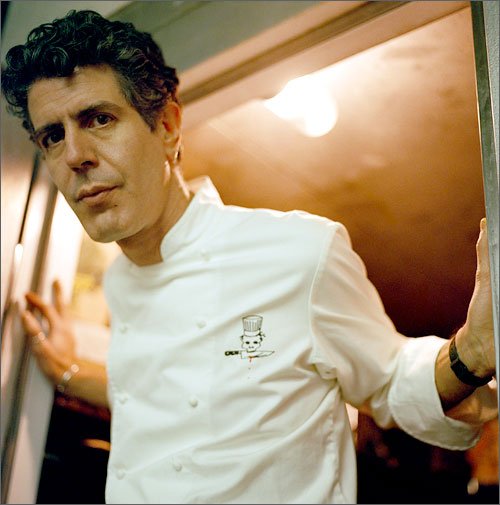
The Bourdain Trail: Asia Edition
Every dish, stall and dining room Anthony Bourdain visited across Vietnam and Japan on No Reservations, with the story behind each one, in one searchable stop. Built for travellers who plan a layover the way he planned an episode.
Anthony Bourdain filmed in Vietnam more than almost any other country he visited, returning across three separate series — A Cook’s Tour, No Reservations and Parts Unknown — from his first trip in 2000 through to a 2016 episode in Hanoi that ended with him sharing a plastic-stool bowl of bún chả with President Obama. That meal turned an unassuming Hanoi noodle shop into one of the most-visited restaurants in the country, and it’s the clearest example of what made his approach to Vietnam different: he wasn’t chasing the country’s best restaurant, he was chasing its most honest one.
Japan pulled at him for different reasons. He described his first trip to Tokyo as genuinely disorienting, the kind of experience that reset how he thought about food and travel for the rest of his career, and he kept coming back across all three shows to chase the city’s range — from a 230-year-old soba counter to the convenience-store egg sandwiches he defended on camera more than once. If Vietnam represented open-hearted discovery for him, Japan represented an obsession with craft and precision, and together the two countries anchor a huge share of everything he ever filmed in Asia.
“It grabs you and doesn’t let you go.”
— on Vietnam, Vietnam Tourism“Be a traveler, not a tourist.”
— on travel philosophy, Japan Nakama“You are not invited. This is the other Tokyo.”
— Tokyo field notes, Explore Parts Unknown / CNNSix Ways to Prep Like You’re About to Film an Episode
- Skip the “best of” list for at least one meal a day. Eat where the plastic stools are lowest to the ground and the menu is shortest — a place doing one dish for decades usually does it better than a place doing forty.
- Carry cash. Most of the stalls and counters on this list, in both countries, don’t take cards.
- Eat in smaller rounds rather than three big meals. Street food in Vietnam and Japan is built for grazing across a day, not one sit-down blowout.
- Learn five words before you land: hello, thank you, delicious, check please, and however you say “no chili” or “extra chili.” It changes how you’re treated at a counter.
- Watch who’s already sitting down before you decide. A stall packed with locals at an odd hour is a stronger signal than any star rating.
- If you’ve only got a layover, pick one neighborhood and walk it slowly instead of taxiing between five must-see stops. Bourdain rarely covered more ground than you can on foot in half a day.
He never ordered the safe thing on the menu, and he never filmed a city from a hotel balcony. If you have six hours between flights in Tokyo or Hanoi, this is the list he’d hand you on the way out the door.
Bún chả
Grilled pork patties and pork belly served over rice noodles, dunked bite by bite in a fish-sauce broth with pickled papaya and carrot, then eaten alongside a full plate of fresh herbs. Bourdain’s stop was in Hanoi’s Old Quarter, where the city’s oldest food stalls cluster block by block. This is the same Hanoi spot where Bourdain shared bun cha and beer with President Obama in 2016; the table they sat at is preserved behind glass, and the dish has been nicknamed “Combo Obama” on the menu ever since.
Bún bò Huế
A spicy, lemongrass-forward beef and pork noodle soup from the old imperial capital of Hue, richer and hotter than Hanoi’s pho, built on chili oil, shrimp paste and simmered beef bones. Bourdain’s stop was in Ho Chi Minh City’s District 1 street-food scene. The stall became internationally known after Bourdain’s visit and now operates as a proper restaurant rather than a single roadside cart, drawing travelers specifically because of the show.
Bánh xèo
A turmeric-yellow rice-flour crepe fried crisp around pork, shrimp and bean sprouts, folded over and torn apart by hand, then wrapped in lettuce and herbs before dipping in nuoc cham. Bourdain’s stop was in Ho Chi Minh City’s District 1 street-food scene.
Cao lầu
Hoi An’s signature noodle dish uses thick, chewy noodles said to require water from a specific local well, topped with sliced pork, croutons and greens in a light soy-based sauce rather than a full broth. Bourdain’s stop was in Hoi An’s old town market, one of the best-preserved food markets in Vietnam.
Bánh mì
Vietnam’s baguette sandwich, built on a light, airy French-influenced loaf and packed with pate, cold cuts or grilled meat, pickled daikon and carrot, cucumber, cilantro and chili. Bourdain’s stop was in Hoi An’s old town market, one of the best-preserved food markets in Vietnam.
Duck
A regional Central Highlands preparation, often grilled or braised with local herbs and served as part of a highland meal distinct from Vietnam’s coastal, seafood-heavy cooking. Bourdain’s stop was in Vietnam’s Central Highlands, far from the coastal seafood cooking most visitors associate with the country.
Vegetarian dishes
Monastery cooking built around tofu, mushrooms and vegetables prepared to mimic the texture of meat, part of the Buddhist vegetarian tradition still practiced in temples across the Central Highlands. Bourdain’s stop was in Vietnam’s Central Highlands, far from the coastal seafood cooking most visitors associate with the country.
Wild boar
A mountain specialty in the Central Highlands, typically grilled or stir-fried with wild herbs, favored by long-haul motorbike drivers who stop at roadside spots along the highland routes. Bourdain’s stop was in Vietnam’s Central Highlands, far from the coastal seafood cooking most visitors associate with the country.
Java-Mouse deer
A small highland game animal traditionally hunted and cooked by ethnic minority communities in Vietnam’s Central Highlands, part of the same mountain-cuisine tradition as the wild boar. Bourdain’s stop was in Vietnam’s Central Highlands, far from the coastal seafood cooking most visitors associate with the country.
Birds and insects
An exotic-eating stop featuring minced turtle dove, whole sparrow and ant larvae, dishes that push well past typical tourist fare. Bourdain’s stop was in Hanoi’s Old Quarter, where the city’s oldest food stalls cluster block by block.
Rice wine
Vietnamese ruou gao, a home-distilled or small-batch fermented rice spirit typically drunk neat in small glasses as part of the social ritual of a long Hanoi evening. Bourdain’s stop was in Hanoi’s Old Quarter, where the city’s oldest food stalls cluster block by block.
Seafood soup
A Ho Chi Minh City street-stall soup built on a light seafood broth with rice noodles, herbs and whatever shellfish is fresh that day. Bourdain’s stop was in Ho Chi Minh City’s District 1 street-food scene.
Butter snails
Oc bo, small river or sea snails sauteed in butter and garlic, a beer-hall favorite across Ho Chi Minh City’s snail-restaurant scene, eaten with a tamarind dipping sauce. Bourdain’s stop was in Ho Chi Minh City’s District 1 street-food scene.
Chicken feet
Marinated, grilled or braised chicken feet, a common Vietnamese street-food snack valued for its texture and eaten as a beer-side nibble rather than a meal. Bourdain’s stop was in Ho Chi Minh City’s District 1 street-food scene.
Freshwater crabs
Small river crabs, often stir-fried or boiled and cracked by hand, shared communally over beer in the same casual street-food scene as the butter snails. Bourdain’s stop was in Ho Chi Minh City’s District 1 street-food scene.
Charcoal-grilled clams
Clams grilled directly over charcoal until they pop open, finished with scallion oil and crushed peanuts, part of a seafood spread eaten near Ha Long Bay. Bourdain’s stop was on Tuan Chau Island near Ha Long Bay.
Stir-fried squid
Squid coated lightly in corn flour and flash-fried, served alongside the grilled clams as part of the same island seafood dinner. Bourdain’s stop was on Tuan Chau Island near Ha Long Bay.
Spring rolls
Fresh or fried rolls packed with cabbage, bean sprouts, pork, shrimp and egg, wrapped in rice paper and dipped in nuoc cham. Bourdain’s stop was on Tuan Chau Island near Ha Long Bay.
Chicken salad
Goi ga, a Vietnamese chicken salad built on shredded chicken, thinly sliced onion, herbs and chili, dressed with fish sauce and lime. Bourdain’s stop was on Tuan Chau Island near Ha Long Bay.
Bia hơi
Hanoi’s fresh draft beer, brewed daily and served cheap on plastic stools along the street, and the default way to close out a night of street eating. Bourdain’s stop was in Hanoi’s Old Quarter, where the city’s oldest food stalls cluster block by block.
Soba
Thin buckwheat noodles served either chilled with a dipping sauce or hot in broth, a dish that lives or dies on the quality of the buckwheat itself. Bourdain’s stop was in Tokyo, where hyper-specialized kitchens often serve a single dish for decades.
Sushi
Vinegared rice topped or wrapped with raw fish, the backbone of Japanese haute cuisine and the format most closely associated with Tokyo’s Edomae tradition. Bourdain’s stop was in Tokyo, where hyper-specialized kitchens often serve a single dish for decades. Run by Jiro Ono, subject of the documentary Jiro Dreams of Sushi and one of the most famous sushi chefs in the world, this counter has become one of the hardest reservations in Tokyo since the show and film aired.
Yakitori
Bite-sized cuts of chicken, including thigh, skin and offal, skewered and grilled over binchotan charcoal, seasoned simply with salt or a sweet soy tare. Bourdain’s stop was in Tokyo, where hyper-specialized kitchens often serve a single dish for decades.
Chicken sashimi
Raw chicken breast or thigh, sliced thin and served with ginger and soy, a dish that only works with same-day, carefully sourced bird. Bourdain’s stop was in Tokyo, where hyper-specialized kitchens often serve a single dish for decades.
Chicken tataki
Chicken seared hard on the outside and left raw in the center, served sliced with citrus and scallion. Bourdain’s stop was in Tokyo, where hyper-specialized kitchens often serve a single dish for decades.
Monkfish
Anko, a winter delicacy in Japan, prepared multiple ways in a single meal, often including monkfish liver, sometimes called the foie gras of the sea. Bourdain’s stop was in Tokyo, where hyper-specialized kitchens often serve a single dish for decades.
Cocktails
Precision Japanese bar craft, hand-cut ice, meticulous stirring and shaking technique, applied to classic and original cocktail recipes. Bourdain’s stop was in Tokyo, where hyper-specialized kitchens often serve a single dish for decades.
Kaiseki
A traditional multi-course meal built around seasonality, with each small course reflecting a moment in the calendar, refined over centuries in Kyoto’s ryokan culture. Bourdain’s stop was in Kyoto, the historic center of refined Japanese cuisine.
Ramen
Wheat noodles in a broth built over hours or days, tonkotsu, miso, shoyu or shio, topped with chashu pork, egg and regional garnishes. Bourdain’s stop was in Hokkaido, Japan’s northern island, known for cold-water seafood and hearty, warming food.
Seafood
A dining stop built around cold-water seafood, crab, scallop, uni and salmon roe pulled from some of the richest fishing grounds in Japan. Bourdain’s stop was in Hokkaido, Japan’s northern island, known for cold-water seafood and hearty, warming food.
Yakitori
Bite-sized cuts of chicken, including thigh, skin and offal, skewered and grilled over binchotan charcoal, seasoned simply with salt or a sweet soy tare. Bourdain’s stop was in Hokkaido, Japan’s northern island, known for cold-water seafood and hearty, warming food.
Soba
Thin buckwheat noodles served either chilled with a dipping sauce or hot in broth, a dish that lives or dies on the quality of the buckwheat itself. Bourdain’s stop was in Hokkaido, Japan’s northern island, known for cold-water seafood and hearty, warming food.
Hotel kaiseki
A multi-course kaiseki meal served as part of an onsen hotel stay, pairing seasonal dishes with the ritual of hot-spring bathing. Bourdain’s stop was in Hokkaido, Japan’s northern island, known for cold-water seafood and hearty, warming food.
Seafood market tasting
A working fish market tasting stop, where vendors serve the day’s catch directly, sea urchin, crab and sashimi-grade fish sourced within hours. Bourdain’s stop was in Kanazawa, home to one of Japan’s best-known fresh-food markets.
Japanese pub food
Izakaya-style small plates meant for sharing over drinks, grilled skewers, fried items, pickles and simmered dishes ordered a few at a time. Bourdain’s stop was in Tokyo, where hyper-specialized kitchens often serve a single dish for decades.
French-Japanese tasting menu
A tasting menu applying French technique to Japanese ingredients and seasonality, part of Tokyo’s high-end fusion dining scene. Bourdain’s stop was in Tokyo, where hyper-specialized kitchens often serve a single dish for decades.
Teppanyaki
Meat, seafood and vegetables grilled tableside on a flat iron griddle, a theatrical style of cooking that became one of Japan’s best-known culinary exports. Bourdain’s stop was in Tokyo, where hyper-specialized kitchens often serve a single dish for decades.
Tempura
Seafood and vegetables battered light and fried quickly in hot oil, served immediately so the coating stays crisp rather than greasy. Bourdain’s stop was in Tokyo, where hyper-specialized kitchens often serve a single dish for decades.
Udon
Thick, chewy wheat noodles served hot in broth or cold with a dipping sauce, heartier and simpler than soba. Bourdain’s stop was in Tokyo, where hyper-specialized kitchens often serve a single dish for decades.
Tofu
Fresh, often house-made tofu served simply, chilled with soy and ginger or in a hot pot, to let the bean’s own texture carry the dish. Bourdain’s stop was in Tokyo, where hyper-specialized kitchens often serve a single dish for decades.
Natto
Fermented soybeans with a famously strong smell and sticky texture, eaten over rice, one of the most divisive foods in Japan even among Japanese diners. Bourdain’s stop was as part of Bourdain’s broader route through the country.
Kobe beef
Wagyu from cattle raised in Hyogo Prefecture under strict breeding and feeding standards, prized for its extreme marbling. Bourdain’s stop was as part of Bourdain’s broader route through the country.
Unagi
Freshwater eel, grilled over charcoal and basted repeatedly with a sweet soy glaze, typically served over rice. Bourdain’s stop was as part of Bourdain’s broader route through the country.
Miso soup
A daily-staple soup built on dashi stock and fermented soybean paste, varying by region and often finished with tofu, seaweed or scallion. Bourdain’s stop was as part of Bourdain’s broader route through the country.
Pickles
Tsukemono, an array of pickled vegetables served alongside nearly every Japanese meal to cut richness and cleanse the palate. Bourdain’s stop was as part of Bourdain’s broader route through the country.
Sashimi
Raw fish sliced and served without rice, judged purely on the quality of the fish and the precision of the cut. Bourdain’s stop was in Tokyo, where hyper-specialized kitchens often serve a single dish for decades.
Ramen
Wheat noodles in a broth built over hours or days, tonkotsu, miso, shoyu or shio, topped with chashu pork, egg and regional garnishes. Bourdain’s stop was in Tokyo, where hyper-specialized kitchens often serve a single dish for decades.
Tonkatsu
A breaded, deep-fried pork cutlet served with shredded cabbage and a tangy sauce, one of Japan’s most popular Western-influenced comfort dishes. Bourdain’s stop was in Tokyo, where hyper-specialized kitchens often serve a single dish for decades.
Okonomiyaki
A savory Osaka pancake mixing shredded cabbage, batter and a choice of meat or seafood, cooked on a griddle and finished with sauce, mayonnaise and bonito flakes. Bourdain’s stop was in Osaka, a city that built its culinary identity on affordable, fast, and deeply flavorful street food.
Takoyaki
Ball-shaped snacks of batter and diced octopus, cooked in a molded pan until crisp outside and molten inside, topped with sauce, mayo and bonito flakes. Bourdain’s stop was in Osaka, a city that built its culinary identity on affordable, fast, and deeply flavorful street food.
Kushikatsu
Skewered, breaded and deep-fried meat, seafood and vegetables, eaten with a shared dipping sauce under a strict one-dip-only rule. Bourdain’s stop was in Osaka, a city that built its culinary identity on affordable, fast, and deeply flavorful street food.
Udon
Thick, chewy wheat noodles served hot in broth or cold with a dipping sauce, heartier and simpler than soba. Bourdain’s stop was in Osaka, a city that built its culinary identity on affordable, fast, and deeply flavorful street food.
Shabu-shabu
Thin-sliced meat and vegetables swished briefly through simmering broth at the table, then dipped in ponzu or sesame sauce. Bourdain’s stop was in Tokyo, where hyper-specialized kitchens often serve a single dish for decades.
Sukiyaki
Thin-sliced beef simmered in a sweet soy-based sauce with vegetables and tofu, traditionally dipped in raw egg before eating. Bourdain’s stop was in Tokyo, where hyper-specialized kitchens often serve a single dish for decades.
Yakitori
Bite-sized cuts of chicken, including thigh, skin and offal, skewered and grilled over binchotan charcoal, seasoned simply with salt or a sweet soy tare. Bourdain’s stop was in Tokyo, where hyper-specialized kitchens often serve a single dish for decades.
Tuna sushi
Maguro, one of the most prized sushi toppings, ranging from lean akami to fatty otoro, judged heavily on marbling. Bourdain’s stop was in Tokyo, where hyper-specialized kitchens often serve a single dish for decades.
Sea urchin
Uni, a sushi topping prized for its rich, briny, custard-like texture, one of the more polarizing and expensive items on a Tokyo sushi counter. Bourdain’s stop was in Tokyo, where hyper-specialized kitchens often serve a single dish for decades.
Clam soup
A clear, delicate broth built around clams and their own briny liquor, often served as a palate-clearing course. Bourdain’s stop was in Tokyo, where hyper-specialized kitchens often serve a single dish for decades.
Katsu curry
A breaded pork or chicken cutlet served over rice and smothered in a mild, thick Japanese curry sauce. Bourdain’s stop was in Tokyo, where hyper-specialized kitchens often serve a single dish for decades.
Somen
Very thin wheat noodles, usually served cold with a light dipping sauce, especially popular as a refreshing summer dish. Bourdain’s stop was in Kyoto, the historic center of refined Japanese cuisine.
Matcha sweets
Kyoto-style wagashi built around powdered green tea, served as a light accompaniment to a formal tea ceremony. Bourdain’s stop was in Kyoto, the historic center of refined Japanese cuisine.
Pickled vegetables
Kyoto-style tsukemono, often made with the region’s own vegetables and known for lighter, more delicate pickling than other regions. Bourdain’s stop was in Kyoto, the historic center of refined Japanese cuisine.
Tofu skin
Yuba, the skin that forms on top of simmering soy milk, lifted off in sheets and served fresh or dried, a Kyoto specialty tied to the city’s temple cooking. Bourdain’s stop was in Kyoto, the historic center of refined Japanese cuisine.
Mackerel sushi
Saba sushi, made with vinegar-cured mackerel, a Kyoto and Kansai specialty developed because the inland city had no easy access to fresh fish. Bourdain’s stop was in Kyoto, the historic center of refined Japanese cuisine.
Fugu
Pufferfish, a dish that requires specially licensed chefs because the fish’s organs contain a potent toxin, sliced sashimi-style and prized as much for the ritual as the flavor. Bourdain’s stop was as part of Bourdain’s broader route through the country.
Wagyu beef
Japanese beef bred for intense marbling, graded on a strict national scale and served in small, rich portions. Bourdain’s stop was as part of Bourdain’s broader route through the country.
Rice balls
Onigiri, rice molded around a filling and wrapped in seaweed, Japan’s most common grab-and-go food. Bourdain’s stop was as part of Bourdain’s broader route through the country.
Mochi
Pounded glutinous rice formed into a chewy cake, eaten plain or filled with sweet bean paste, traditionally made by hand. Bourdain’s stop was as part of Bourdain’s broader route through the country.
Green tea
Japanese green tea ranges from everyday sencha to ceremonial-grade matcha, with preparation and quality varying by region and grade. Bourdain’s stop was as part of Bourdain’s broader route through the country.
Sake
Rice wine brewed through a fermentation process closer to beer-making than winemaking, served warm or chilled depending on grade. Bourdain’s stop was as part of Bourdain’s broader route through the country.
Shochu
A distilled spirit made from sweet potato, barley or rice, typically lower proof than whisky and often mixed with hot water or soda. Bourdain’s stop was as part of Bourdain’s broader route through the country.
Dumplings
Asian-style dumplings, generally filled with pork or vegetables, either steamed, boiled or pan-fried. Bourdain’s stop was as part of Bourdain’s broader route through the country.
Gyoza
Pan-fried dumplings, crisped on one side and steamed on the other, filled with ground pork, cabbage and garlic. Bourdain’s stop was in Tokyo, where hyper-specialized kitchens often serve a single dish for decades.
Seaweed
Nori and other sea vegetables, used as a wrap, garnish or standalone side, central to the umami base of Japanese cooking. Bourdain’s stop was as part of Bourdain’s broader route through the country.
Egg custard
Chawanmushi, a savory steamed egg custard studded with seafood, mushroom or chicken, served warm in its own cup. Bourdain’s stop was as part of Bourdain’s broader route through the country.
Oysters
Raw or lightly grilled oysters from Japan’s cold coastal waters, served simply with citrus or ponzu. Bourdain’s stop was as part of Bourdain’s broader route through the country.
Crab
Hokkaido’s signature seafood, king, snow or hairy crab, served raw, steamed or grilled. Bourdain’s stop was in Hokkaido, Japan’s northern island, known for cold-water seafood and hearty, warming food.
Scallops
Hokkaido scallops, prized for their size and sweetness, often served raw as sashimi or lightly seared. Bourdain’s stop was in Hokkaido, Japan’s northern island, known for cold-water seafood and hearty, warming food.
Miso ramen
A Sapporo-born ramen style using a rich miso-based broth, developed to be heartier than Tokyo’s shoyu ramen. Bourdain’s stop was in Hokkaido, Japan’s northern island, known for cold-water seafood and hearty, warming food.
Zaru soba
Chilled soba noodles served on a bamboo mat with a light dipping sauce, scallion and wasabi. Bourdain’s stop was in Tokyo, where hyper-specialized kitchens often serve a single dish for decades.
Sashimi platter
An assorted plate of raw fish cuts, meant to showcase a range of textures and flavors from a single kitchen. Bourdain’s stop was in Tokyo, where hyper-specialized kitchens often serve a single dish for decades.
Curry rice
Japanese-style curry, milder and thicker than Indian or Thai curry, served over rice as a household comfort food. Bourdain’s stop was in Tokyo, where hyper-specialized kitchens often serve a single dish for decades.
Tamago
Sweetened Japanese omelet, sliced and served over rice as a sushi item, often used to judge a sushi chef’s skill. Bourdain’s stop was in Tokyo, where hyper-specialized kitchens often serve a single dish for decades.
Karaage
Japanese-style fried chicken, marinated in soy, ginger and garlic before being coated lightly and fried. Bourdain’s stop was as part of Bourdain’s broader route through the country.
Tofu hot pot
A seasonal hot pot built around tofu simmered with vegetables and dashi broth, eaten communally at the table. Bourdain’s stop was as part of Bourdain’s broader route through the country.
Noodles
A general noodle stop reflecting Japan’s broader noodle culture spanning ramen, soba, udon and somen. Bourdain’s stop was as part of Bourdain’s broader route through the country.
Chirashi
Sushi rice topped with an assortment of sliced raw fish, roe and garnish, scattered across the bowl. Bourdain’s stop was in Tokyo, where hyper-specialized kitchens often serve a single dish for decades.
Onigiri
Hand-formed rice balls wrapped in seaweed, filled with pickled plum, salmon or other savory fillings. Bourdain’s stop was as part of Bourdain’s broader route through the country.
Ramen broth
A broth-focused stop highlighting the hours-long process behind a proper ramen base, pork bone, chicken or miso. Bourdain’s stop was in Hokkaido, Japan’s northern island, known for cold-water seafood and hearty, warming food.
Seafood donburi
A rice bowl topped with an assortment of fresh seafood, often built directly from that day’s market catch. Bourdain’s stop was in Kanazawa, home to one of Japan’s best-known fresh-food markets.
Oden
A winter hot pot of fish cakes, daikon, eggs and other ingredients slow-simmered in a light dashi broth. Bourdain’s stop was as part of Bourdain’s broader route through the country.
Eggplant
A seasonal vegetable dish, often grilled or simmered in dashi and served as a side within a larger meal. Bourdain’s stop was as part of Bourdain’s broader route through the country.
Pickled plum
Umeboshi, an intensely sour, salty pickled plum eaten as a side dish or onigiri filling. Bourdain’s stop was as part of Bourdain’s broader route through the country.
Grilled fish
A simply grilled whole or filleted fish, seasoned with salt and served as a standard component of a traditional Japanese meal. Bourdain’s stop was as part of Bourdain’s broader route through the country.
Book the Trail
Guided versions of the routes above, bookable in advance.
Dinner With a Local Host
A home-cooked Vietnamese or Japanese meal, Bourdain-style access to a real kitchen.
Book on EatwithMore Tours & Attraction Passes
Browse reviewed tours or bundle city attractions into one pass.
Browse on Go CityTest Your Bourdain Knowledge
Multiple choice, pulled live from the trail above. New question every round. (Requires JavaScript.)
Loading quiz…
Get the Printable Trail Map
A one-page PDF of every stop above, organised by city.
Sourced and cross-referenced from public No Reservations episode guides and location trackers, including Continents & Condiments (Vietnam), Continents & Condiments (Japan), No Reservations Locations, Continents & Condiments (Hokkaido), and The Gaijin Ghost (Osaka). Entries listed only by city or country reflect stops where the episode confirmed the dish but public sources did not preserve an exact venue name. Dish and technique descriptions reflect general, widely documented culinary background rather than restaurant-specific verified detail (prices, hours and current operating status are not guaranteed — confirm before visiting independently, or book a guided version above).