
8 Epic São Paulo Layover Ideas for Food, Art & Hidden Gems
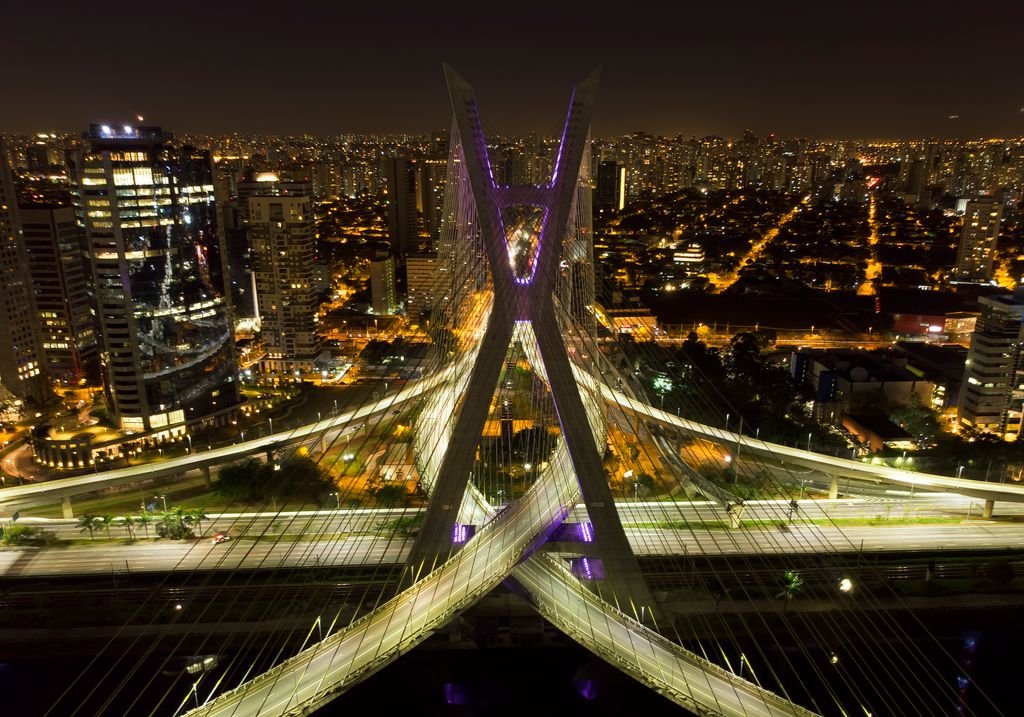
Look up from almost anywhere in central São Paulo and you will eventually see a helicopter. The city has more registered helicopters than any other on Earth, over 400 of them, taking off and landing roughly 2,200 times a day from more than 260 rooftop helipads, guided by the only air traffic control system in the world built exclusively for helicopters. The reason is blunt: São Paulo’s road traffic is bad enough that the city’s wealthy simply fly over it. That single fact tells you almost everything about planning a layover here. Whatever you do, respect the traffic, because the people who live here certainly do.
São Paulo is the answer sentence first, and it comes with a catch most guides don’t mention: Guarulhos (GRU) is now Latin America’s busiest airport, handling 47.2 million passengers in 2025, and the fastest route into the city is a train, not a taxi. But before any of that matters, one thing needs settling before you even book the ticket. If you hold a US, Canadian or Australian passport, you cannot leave this airport, or even connect through it airside, without an e-Visa arranged in advance. This is not a same-day formality. It is the single most important planning step in this entire guide, and it comes before transit, before the gauge, before anything else.
Assuming your entry documents are sorted, the pain point here is pure traffic. GRU sits roughly 25km from central São Paulo, and that distance can take 30 minutes at 3am or 90-plus minutes during Monday rush hour, on the same road, with no way to predict which you’ll get. The CPTM train sidesteps this entirely, at the cost of being slightly less comfortable with luggage. This guide is built around that trade-off.
Below: the e-Visa requirement in full, the honest train-versus-car maths, what a 2026 landside construction change means for your rideshare pickup, and how to see Avenida Paulista and a proper São Paulo lunch without letting traffic eat your return buffer.
Since 10 April 2025, citizens of the United States, Canada and Australia need an approved e-Visa to enter Brazil for any purpose, including tourism, business, and airport transit specifically. This is not optional and there is no exception for a short layover: airlines will not issue a boarding pass without a validated e-Visa code, and travellers without one are denied boarding at the origin airport, not turned away in Brazil. Processing has ranged from 48 hours to several business days depending on the period, and the fee has been reported at different points between roughly $51 and $81; check the official VFS Global portal for the current fee and timeline, and apply at least three weeks before travel to be safe. If you already hold a valid Brazilian visa, a CRNM residence card, or a passport from a nationality with a standing exemption, this does not apply to you, but confirm your specific status before flying. Our layover visa guide covers entry rules by nationality, or use iVisa for a guided e-Visa application with human review before your travel date.
Airlines at GRU: Who Flies Here
GRU reclaimed its title as Latin America’s busiest airport in 2025 with 47.2 million passengers, overtaking Bogotá and Mexico City, driven partly by new long-haul routes to Doha, Los Angeles and Johannesburg and Brazil’s expanded e-Visa platform easing processing for eligible nationalities. Three passenger terminals operate, with Terminals 2 and 3 connected by a walkway; Terminal 1 requires the free shuttle bus.
LATAM: the hub carrier that defines GRU
LATAM operates the airport’s largest network by far, with GRU functioning as its primary hub for both domestic Brazilian routes and long-haul connections to North America, Europe and other South American capitals. If your itinerary is LATAM-to-LATAM, expect a straightforward same-terminal or short-walkway connection; GRU’s overall route network reaches roughly 90 domestic and international destinations.
Should You Leave the Airport? The Decision Guide
Five hours is the realistic floor for a São Paulo layover, assuming your e-Visa (if required) is already approved. The maths: entry formalities run 30 to 60 minutes, the CPTM train is 30 to 40 minutes each way, and a 2-hour return buffer covers even a bad-traffic scenario on the way back if you end up needing a car.
How much time do you actually have?
Enter your arrival and departure and we calculate the real usable window after entry formalities, transit and buffer time. Most people have less than they think.
Getting Into São Paulo: Every Option, Priced
The CPTM train is the right default for almost any layover here, precisely because it’s the one option immune to the city’s defining feature: traffic that can triple a journey time with zero warning.
| Option | To | Time | Cost | Notes |
|---|---|---|---|---|
| CPTM Line 13 train | Luz Station, downtown | 30–40 min | R$5 (~$1) | Free shuttle bus from terminals to the station (every ~15 min). Cheapest and most reliable option. Doesn’t run midnight–4am. |
| Airport Bus Service | Avenida Paulista / Praça da República | 45–90 min, traffic-dependent | R$40–75 | Comfortable coach with A/C and luggage space, direct to the hotel circuit. Fixed fare but still exposed to road traffic. |
| Uber / 99 | Anywhere in the city | 25–90 min, highly traffic-dependent | R$80–140 | Pickup from a designated garage zone, not the curb. Cheaper and more predictable than a metered taxi. |
| Official taxi (Guarucoop) | Anywhere in the city | 25–90 min, traffic-dependent | R$130–200 | Prepaid fixed-fare voucher available at the desk inside arrivals. Only use official, marked taxis. |
| Pre-booked private transfer | Anywhere in the city | 25–90 min, traffic-dependent | R$180–280 | Fixed price regardless of traffic, driver waits with a name sign in arrivals. |
As part of GRU’s ongoing R$2.55 billion expansion, ride-hail pickup points were relocated roughly 300 metres east of the previous curb location starting in March 2026, and international departure security checkpoints have been consolidated onto the mezzanine level. If an older guide, app screenshot, or your own memory of a previous trip points you toward the old pickup spot, follow the current in-terminal signage instead, not your GPS history.
Pay for the train, food and everything else the smart way. Brazil’s Real (BRL) is not always straightforward to obtain at a good rate from home, and airport currency exchange counters run well below the street rate. A Wise or Revolut card converts at the mid-market rate at any city ATM or card terminal, a meaningful saving across a full day of transit, food and a coffee stop.
Planning an onward domestic leg? Compare flight and bus options across Brazil on Omio, useful if Rio de Janeiro or another Brazilian city is your actual final destination beyond this connection.
Your phone needs to work from the moment you land, since your e-Visa confirmation, CPTM route and rideshare pickup instructions all live in an app or inbox. Install an Airalo Brazil eSIM before boarding and it activates the moment you land. For a short layover, Roamless pay-as-you-go data covers a few hours for a couple of dollars.
What to Do in São Paulo on a Layover
Avenida Paulista is the honest centre of a São Paulo layover: MASP, Trianon Park and the avenue’s constant street life all sit within a few minutes of each other, directly reachable from the CPTM line via a short metro transfer.
Avenida Paulista
The financial and cultural spine of the city, 2.8km of banks, cultural centres and constant foot traffic. On Sundays and holidays the avenue closes to cars entirely, turning it into one of the largest pedestrian street parties in South America, though a layover rarely lines up with that timing. Walking it end to end takes about 40 minutes and costs nothing.
MASP (Museu de Arte de São Paulo)
A concrete-and-glass museum that appears to float above Paulista Avenue, suspended on four massive red beams, a radical 1968 design by architect Lina Bo Bardi that deliberately freed the plaza beneath it as public space. Inside, the collection includes Raphael, Rembrandt, Van Gogh and Picasso, displayed frameless on glass easels that let you walk around each painting. Adult admission is R$85, but entry is free for everyone on Tuesdays, when the museum also opens for extended hours.
Ibirapuera Park
São Paulo’s answer to Central Park, roughly 400 acres designed for the city’s 400th anniversary in the 1950s, with running trails, several museums (MAM, the Afro Brasil Museum) and genuinely good people-watching. A short taxi or rideshare from Paulista; best suited to a 7-hour-plus window where it can follow a Paulista/MASP visit rather than replace it.
Beco do Batman (Batman’s Alley)
A constantly evolving open-air street art gallery in Vila Madalena, covering several alleyways with murals that get painted over and replaced regularly, meaning it looks different on every visit. Free to walk through, a genuine change of pace from Paulista’s corporate density, though it adds real transit distance: best attempted on a 9-hour-plus window.
Mercado Municipal (Mercadão)
A cathedral-scale covered market downtown, famous for one specific reason: the mortadella sandwich, a genuinely enormous portion served at counters throughout the hall. Combine with a Praça da República or Luz-area stop if your route brings you through downtown rather than straight to Paulista.
Cross to Trianon Park, directly opposite the museum on Paulista, and shoot back toward the building with its red support beams and the suspended glass box clearly visible, ideally with the avenue’s traffic streaming beneath it for scale. Weekday late afternoon avoids the Tuesday free-entry crowds while still catching good light.
Walk the full length of the alley in Vila Madalena; since the art changes regularly, there’s no single “best” wall, only whatever’s freshest that week. Morning light works best given the alley’s narrow width and limited direct sun. A genuinely different visual register from anything else on this list.
Itineraries by Time Window
Vila Madalena’s street art alley is genuinely worth seeing, but it sits far enough from both the CPTM line and Paulista that reaching it requires a dedicated car trip each way, fully exposed to traffic. Only attempt it with 9-plus hours and a pre-planned return, and treat Paulista and MASP as the honest default for anything shorter.
Travel Scenarios: Real Situations at GRU
You’re a US, Canadian or Australian passport holder connecting through GRU with a 6-hour layover, planning to explore the city, and only discover the e-Visa requirement while checking in for your flight.
Airlines will not issue a boarding pass without a validated e-Visa code, even for a passenger only transiting through Brazil. You are denied boarding at your origin airport, not turned away on arrival, and the layover plan is over before it starts.
Check your e-Visa status the moment you know your itinerary routes through Brazil, ideally weeks in advance. Use iVisa for a guided application with human review if you’re unsure how to navigate the official portal yourself.
You plan your return to GRU around a 25-minute Uber estimate, not realising your trip falls inside São Paulo’s Monday-morning rush hour.
The same trip that takes 25 minutes at 3am can take 90-plus minutes during peak traffic, with no way to know in advance which you’ll get. São Paulo’s traffic is a defining, not incidental, feature of the city.
Default to the CPTM train for your return leg whenever your schedule allows it, since it’s immune to road conditions entirely. If you must drive during a known peak window, add a full extra hour to your estimate.
You’ve been to GRU before, or read an older guide, and head confidently toward where the Uber pickup zone used to be.
As of March 2026, ride-hail pickup moved roughly 300 metres east as part of the airport’s ongoing expansion. Following outdated directions costs a genuine 10-to-15-minute detour on a layover that can’t spare it.
Follow the current in-terminal signage for “App Transporte” rather than memory, GPS history, or an older guide’s directions.
You land with no reais and change money at the first currency counter you see in arrivals before boarding the CPTM.
Airport exchange rates run well below the street rate, a quiet loss on every real you convert, right when you’re converting the most for the day ahead.
Withdraw from a city ATM with a Wise card at the mid-market rate instead, or tap the card wherever cards are accepted, which is nearly everywhere in central São Paulo.
Immigration asks to see your e-Visa confirmation, and you land with no working data to pull up the email you were told to save.
Airport Wi-Fi may not be live or reliable the instant you reach the immigration desk, exactly when you need the document fastest.
Print the e-Visa PDF before you fly, as officially recommended, and install an Airalo Brazil eSIM as a backup so it’s live the moment you land regardless.
Traffic runs long on your return to GRU and you miss a tight, separately booked onward connection.
On a separate-ticket itinerary, the replacement flight cost is entirely yours, and a short-notice long-haul fare out of São Paulo is genuinely expensive.
Carry cover that pays out on missed connections before you fly: World Nomads or comparison via InsureMyTrip.
What to Eat: São Paulo in Four Bites
Feijoada
Brazil’s national dish: a slow-cooked black bean and pork stew, traditionally a Saturday lunch, served with rice, collard greens, orange slices and farofa (toasted cassava flour). A proper plate at a mid-range restaurant near Paulista runs R$45 to R$70, and it’s a genuinely filling, unhurried meal if your window allows a sit-down lunch.
Pastel
A thin, deep-fried pastry pocket filled with cheese, meat or hearts of palm, sold at street stalls and market counters across the city. Cheap, fast, and the honest local answer to street food on a tight window: R$8 to R$15 depending on filling.
Pão de queijo
Small, chewy cheese bread rolls made with cassava flour, a Minas Gerais staple that São Paulo has fully adopted. Sold everywhere from bakeries to airport kiosks, R$3 to R$6 each, and a genuinely good grab-and-go option if your window is genuinely tight.
São Paulo coffee culture
São Paulo’s café scene has grown into one of South America’s most serious, with independent roasters around Vila Madalena and Jardins pulling espresso from Brazilian-grown beans a short drive from where they’re roasted. A proper flat white or espresso runs R$8 to R$15, worth the detour if coffee is part of why you travel.
Staying Inside the Airport: The Under-5-Hours Plan
If the gauge says stay, or if your e-Visa status makes leaving impossible on this trip, GRU’s terminals have solid dining reflecting Brazil’s food culture, genuine duty-free shopping, and a new BTG Pactual-managed VIP terminal opened in December 2024, the first of its kind in Latin America (for cardholders with the right access). Free Wi-Fi covers all three terminals, and Terminals 2 and 3 connect via an indoor walkway.
Working on shared airport Wi-Fi for several hours, at what is now Latin America’s busiest airport, means your banking and saved passwords are travelling over a network shared with thousands of strangers. A VPN closes that exposure in one tap: NordVPN covers the laptop-and-phone combination most travellers carry.
Layover Gear: Connectivity and Power
Your phone needs to work from the moment you land, not least because your e-Visa confirmation and CPTM route both live on it.
Hotels for Overnight Layovers
The overnight decision at GRU is straightforward: stay near the airport for an early departure and sidestep traffic entirely, or stay near Paulista for a genuine evening in the city.
Tours Worth Booking in Advance
Luggage Storage, Transfers and Insurance
Luggage storage
All three GRU terminals have storage counters, but for a Paulista-focused day, storing the bag before boarding the CPTM means arriving in the city hands-free.
Airport transfers
Given how much São Paulo traffic can vary, a pre-booked transfer earns its price here more than almost anywhere else in this guide series: a fixed price regardless of whether your driver hits 25 minutes or 90.
Insurance
Brazil is generally safe for tourists who stay in well-trafficked areas, and the practical risk on a layover is more logistical (a missed connection from traffic) than criminal.
If something goes seriously wrong, lost passport, medical emergency, legal situation, you need your country’s consular representation. Our embassy and consulate guide lists every consular office in every city we cover, with direct phone numbers.
More Layover Guides
GRU Layover FAQ
Official GRU and São Paulo Resources
Primary sources for live flight, transport and entry information. Bookmark these before you fly.
Safety and Help in São Paulo
Sources and Citations
- VisaHQ / Rio Times, “Record Passenger Numbers Help São Paulo-Guarulhos Reclaim Title of Latin America’s Busiest Airport,” February 2026 — 47.2 million 2025 passengers, R$2.55 billion expansion, March 2026 rideshare pickup relocation and mezzanine security consolidation
- Wikipedia, “São Paulo/Guarulhos International Airport” — terminal structure, T3B pier timeline, VIP Terminal opening December 2024
- Wego Travel Blog / Fragomen / VisaHQ, Brazil e-Visa reporting — visa requirement reinstated for US/Canada/Australia effective 10 April 2025, applies to airport transit, fee and processing time ranges, full activation of VFS Global platform 5 February 2026
- Wikipedia, “Visa policy of Brazil” — official visa-exemption and reinstatement history, VIVIS visitor visa terms
- Secret Flying / Airport Transfer Portal, São Paulo airport guides 2026 — CPTM Line 13 routing and fare (R$5), Airport Bus Service fares (R$36.50–75 depending on route), Uber/99/taxi fare ranges, GRU-CGH transfer time and cost
- GRU Airport official site (gru.com.br) — bus routes, terminal transfer information
- MASP official site (masp.org.br) — current admission pricing (R$85 adult) and Tuesday free-entry policy
- Latin America Bureau / BisAviation / Transport in São Paulo (Wikipedia) — helicopter fleet size (400+ registered, 260+ helipads, ~2,200 daily movements), HELICONTROL system origin (2004, Brazilian Air Force)
- CEIC Data, Brazil airport statistics — monthly passenger movement figures through May 2026
- US News, Tour Guide, and independent visitor guides — Ibirapuera Park history and scale, Beco do Batman description, Mercado Municipal detail
Fares, admission prices, transport rules and entry requirements were verified in July 2026 and change without notice, particularly the Brazil e-Visa fee and processing timeline, which has shifted more than once since April 2025. Always confirm critical details, especially your specific nationality’s visa status, against the official sources above before travelling. Some links on this page are affiliate links: they cost you nothing and help keep EpicLayover’s guides free and current.
